
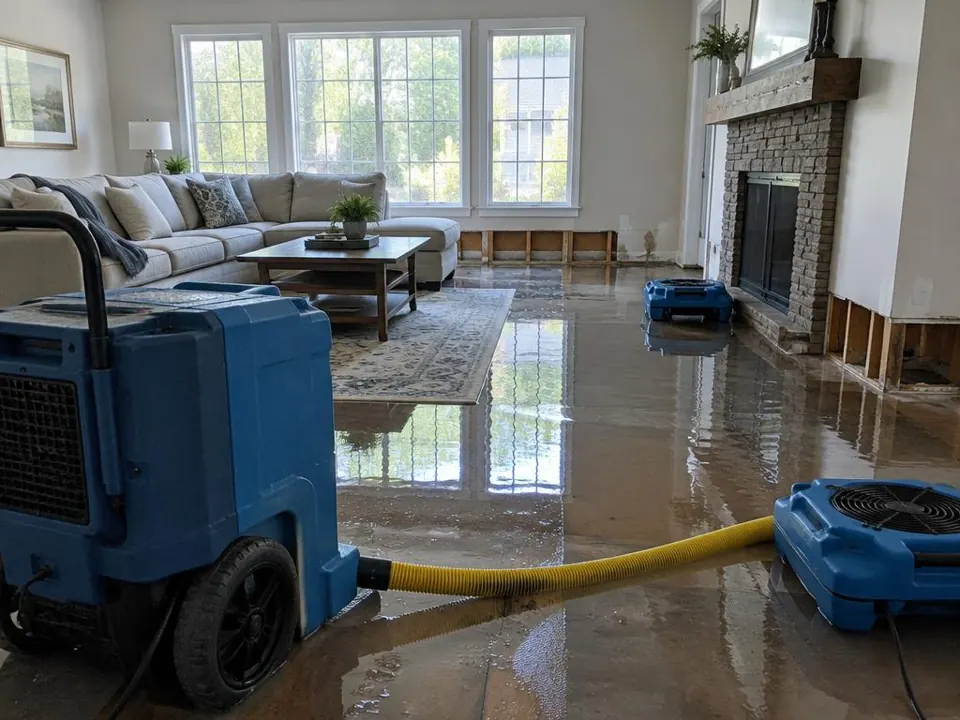
This guide separates source assessment, visible-water removal, drying and later material decisions.
Water damage restoration can involve several professional steps, not a fixed package. Only a qualified professional can determine what this property needs.
What does an assessment need to establish?
A provider should identify the apparent source and determine which rooms and materials need a closer assessment.
A mark on one surface does not establish how far moisture moved behind or below it.
Ask what was observed and what remains uncertain.
What happens after visible water is removed?
Removing accessible water is not the same as drying water-damaged building materials.
A qualified professional can assess drying needs, material condition and any later work without assuming all stages apply.
Read the water extraction guide for the first stage and the structural drying guide for retained moisture.
Which professional questions are distinct?
Ask who will assess the source, what material layers were actually checked and how the professional established drying completion. A broad service label does not diagnose this property. An independent provider decides what work, if any, to perform.
What if water is still entering?
Do not enter the wet area to find its source. The first-hour safety guide covers cautious observations from a dry place; the qualified professional must establish the affected materials.
Sources
- U.S. EPA, Mold Cleanup in Your Home (accessed October 8, 2026).
- U.S. EPA, Flood Cleanup to Protect Indoor Air and Your Health (accessed October 8, 2026).
- U.S. EPA, A Brief Guide to Mold, Moisture and Your Home (accessed October 8, 2026).
- Pasadena Water and Power, Water Leak Assistance Program (accessed October 8, 2026).